Cultivated Courage
Bad is brave
Rooted in the work of Alfred Adler, who told his patients to look at their errors and never at their defects.
Somebody has definitely given you this advice: “Just start! It doesn’t have to be perfect.”
Incredible. Thank you. While we’re at it, let’s tell people who are afraid of flying to simply be in the sky, and let’s let everyone who’s drowning know the trick is to stay on top of the water.
This advice mostly comes from fake perfectionists, those people who say, “Ugh, I’m such a perfectionist, I re-sent that email because of a typo,” and who have then gone on to finish every single thing they’ve ever started.
Real perfectionists have a screenplay from 2017 that’s eleven pages long and that nobody on Earth has ever read, including, for the last several years, them.
So what’s going on? Why can’t a smart adult who really wants to make a thing just…make it?
To figure that out, we need to meet the people who live inside your head.
The first one shows up the moment you have an idea. This is the Little Maker, a tiny guy in a hard hat, super stoked, holding up something lumpy and unidentifiable.
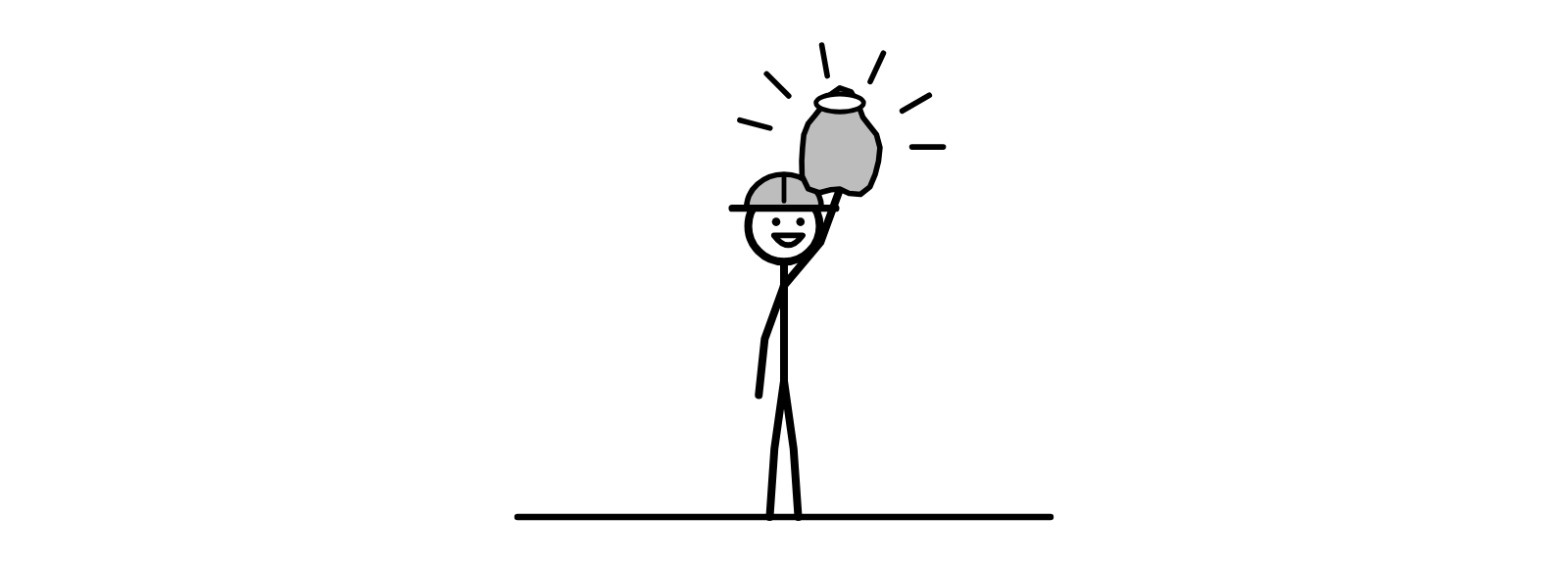
The Little Maker, mid-masterpiece.
The Little Maker loves making stuff (go figure). He’s also terrible at it.
He has no idea he’s terrible at it, though, which is adorable. He’s holding up the lumpy thing so you can see it, because look at it, he made it, isn’t that amazing.
If the Little Maker lived alone, you’d be the most productive person alive. Unfortunately, he has a roommate.
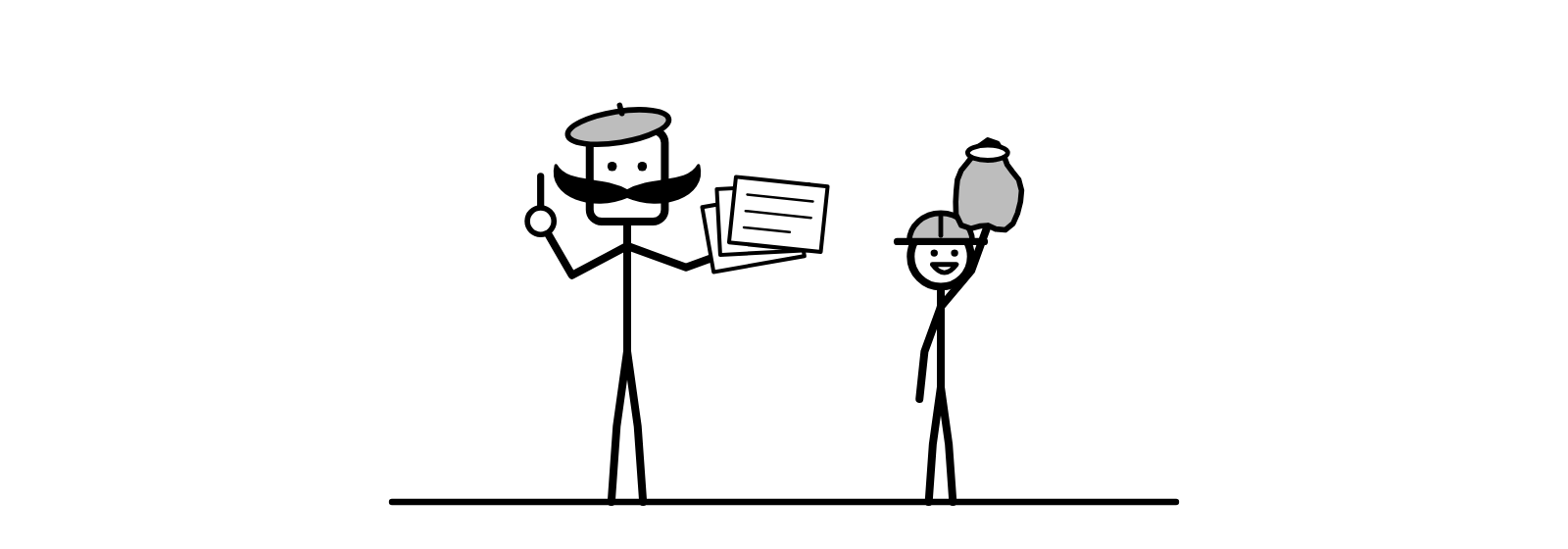
The Notes Guy has notes.
This is the Notes Guy. Enormous mustache, a beret, a stack of index cards, one finger raised.
The Notes Guy has seen every great movie and read every Pulitzer Prize-winning book. And he has some notes.
He’s actually very good at this. You want the Notes Guy. He’s your excellent taste, personified. Nothing worth reading has ever been finished without him.
The only problem is, he’s terrible with timing. Because the Notes Guy will give you his notes whether or not you’ve finished. And unfortunately, he often butts in too soon.
You’ve written four words and from over your shoulder comes, “Hey, sorry, that’s terrible.”
The radio host Ira Glass described the situation better than anybody. He said people get into creative work because they have good taste, and then they start making things, and “for the first couple years you make stuff, it’s just not that good.”
Your taste starts high and stays there. Your skill starts near the floor and creeps up. The space between them is the Gap, and the Little Maker is standing at the bottom of it, still holding up the lumpy thing.
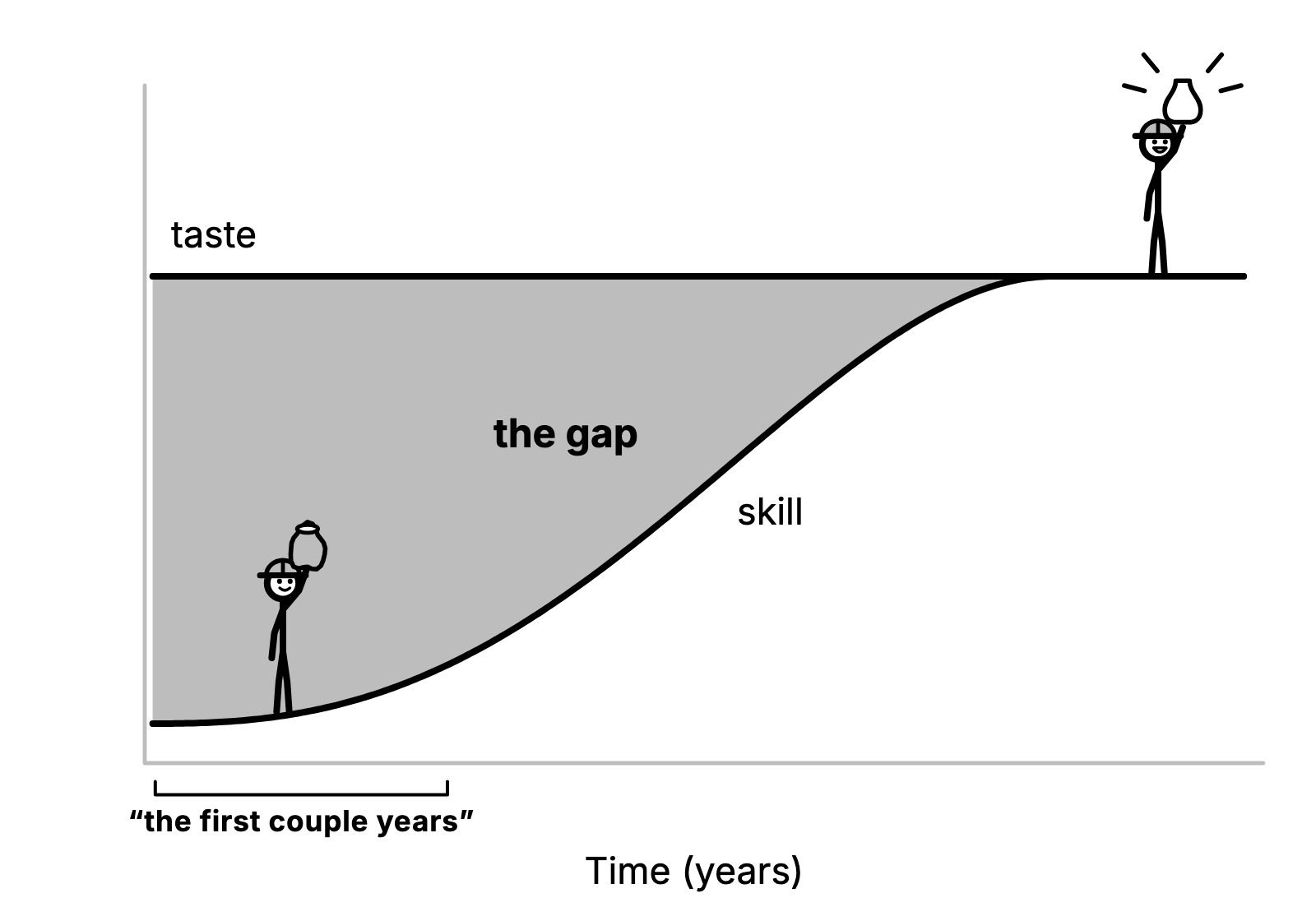
The Gap. It does close, eventually.
The Gap is where most of us quit, and you’d think the Notes Guy would be the one to blame (he’s the guy with the index cards, after all).
But the Notes Guy turns out to be innocent. In 2017, a team led by Fuschia Sirois looked across the research on perfectionism and procrastination and split perfectionism into two parts.
People with high standards for themselves procrastinated less. People who worried about mistakes and about being judged procrastinated more.
Having a guy around who knows what good looks like is a gift. The key is getting him to wait his turn until the idea is complete enough that it’s worth giving notes on.
Which means there’s someone else in your head, and you’ve met him.
The Emperor
Adler had a student named Rudolf Dreikurs who spent decades teaching parents and teachers in America, and Dreikurs gave a name to what most of us are missing. People, he argued, need the courage to be imperfect.
Which sounds like something you’d find on a throw pillow at Target. Or a tattoo you got at sixteen, with a small flock of doves flying around it, which you’ve come to deeply regret (and rightly so).
The Adlerians noticed something strange about people who were afraid of making mistakes, which is that the fear did a lot more damage than the mistakes themselves.
And what frightened those people most, they figured, was what the mistake would prove. The Adlerians called this discouragement, and they saw this kind of perfectionism as discouragement dressed up.
Inside your head, discouragement has a familiar face. It’s the Emperor, the tiny Roman critic in a toga and laurel wreath who leans out of his box at the Stadium of your life, thumb at the ready.
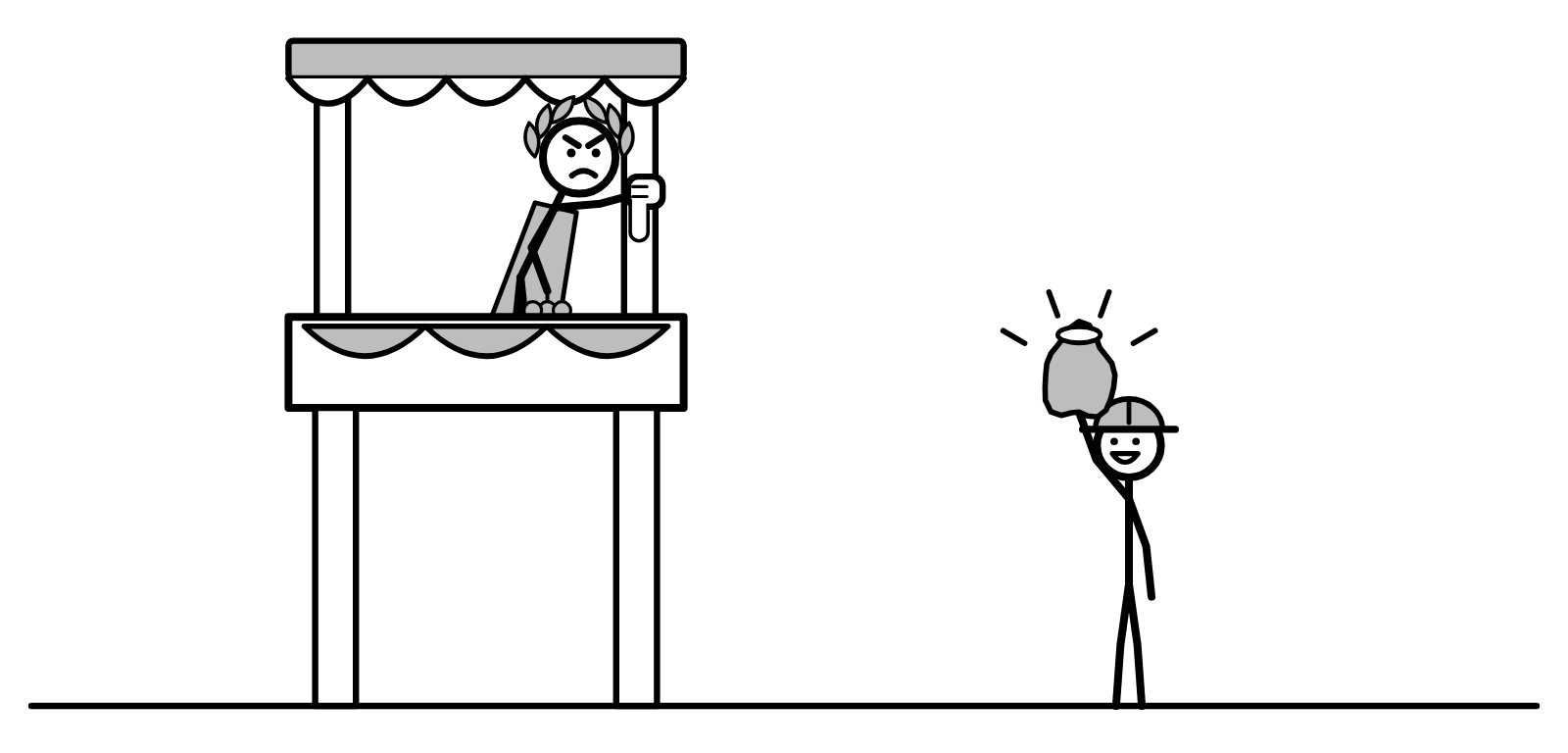
Yeah, he’s not a fan.
The Emperor has exactly one move, and it’s the thumb. The Notes Guy might say the second act drags. The Emperor overhears that, turns to the crowd, and brings his thumb down on you.
“The first page takes too long to get going” becomes “you have no talent.”
“The dialogue sounds clunky” becomes “you’ve never understood people.”
“You overexplained the joke” becomes “who do you think you are, trying to be funny?”
Adler spent his career trying to get people out of this arena, and he had a working rule for it. In treatment, he wrote, the therapist is always able “to draw attention to errors only and never to innate defects.”
Errors only. Never defects.
The first half of each of those lines is an error, and errors are fixable. That’s how skills are built, after all.
You practice. You write a thousand terrible drafts. Over time you get better (hopefully).
The second half (Emperor style) is a defect, and nobody has ever fixed a defect. Because a defect is something you are, which is a very convenient thing for the Emperor to have decided, since it means you can’t change it.
Adler was also oddly cheerful about how far you could go in your chosen domain once you set your mind to it. His conviction (which, he noted, offended a lot of people’s vanity) was that “everybody can do everything,” with the exception of “amazingly high achievement.”
So let’s be real, if you’re 5’5“ you probably ain’t playing pro ball.
But as far as Adler was concerned, nearly everything short of that is available to you. So you can still get pretty damn good, and the Emperor has been badly overstating his authority.
The Stadium
The Emperor gets his power from a venue: an enormous stadium, every seat filled, and everyone in it has their arms crossed.
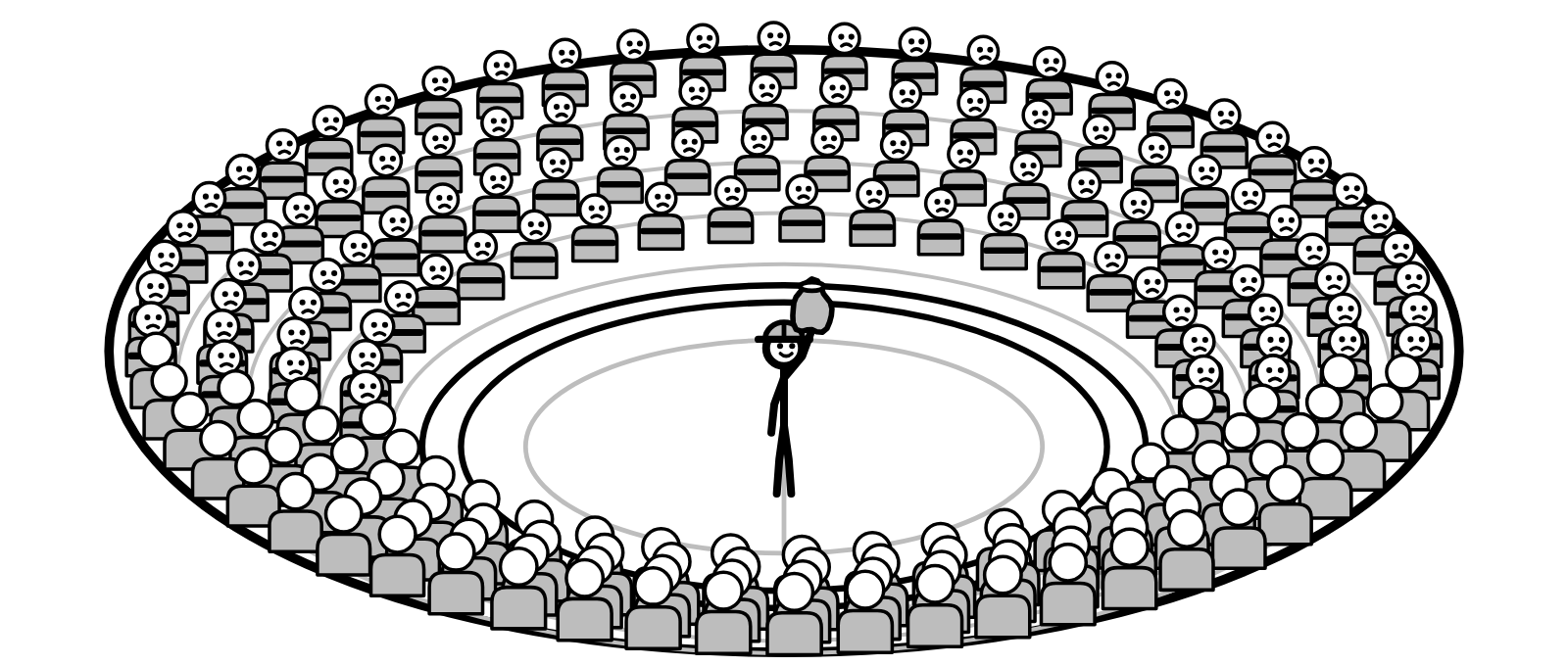
The Stadium, sold out and unimpressed.
Two researchers named Thomas Curran and Andrew Hill pulled together 164 samples covering more than 41,000 college students in the US, Canada and the UK, from 1989 to 2016. Every kind of perfectionism they measured went up.
But the biggest jump, by a lot, was in what psychologists call socially prescribed perfectionism, which is a fancy way of saying the feeling that other people expect you to be perfect.
It rose by about four-tenths of a standard deviation in under thirty years, which, to put it in height terms, is like the average person suddenly getting more than an inch taller.
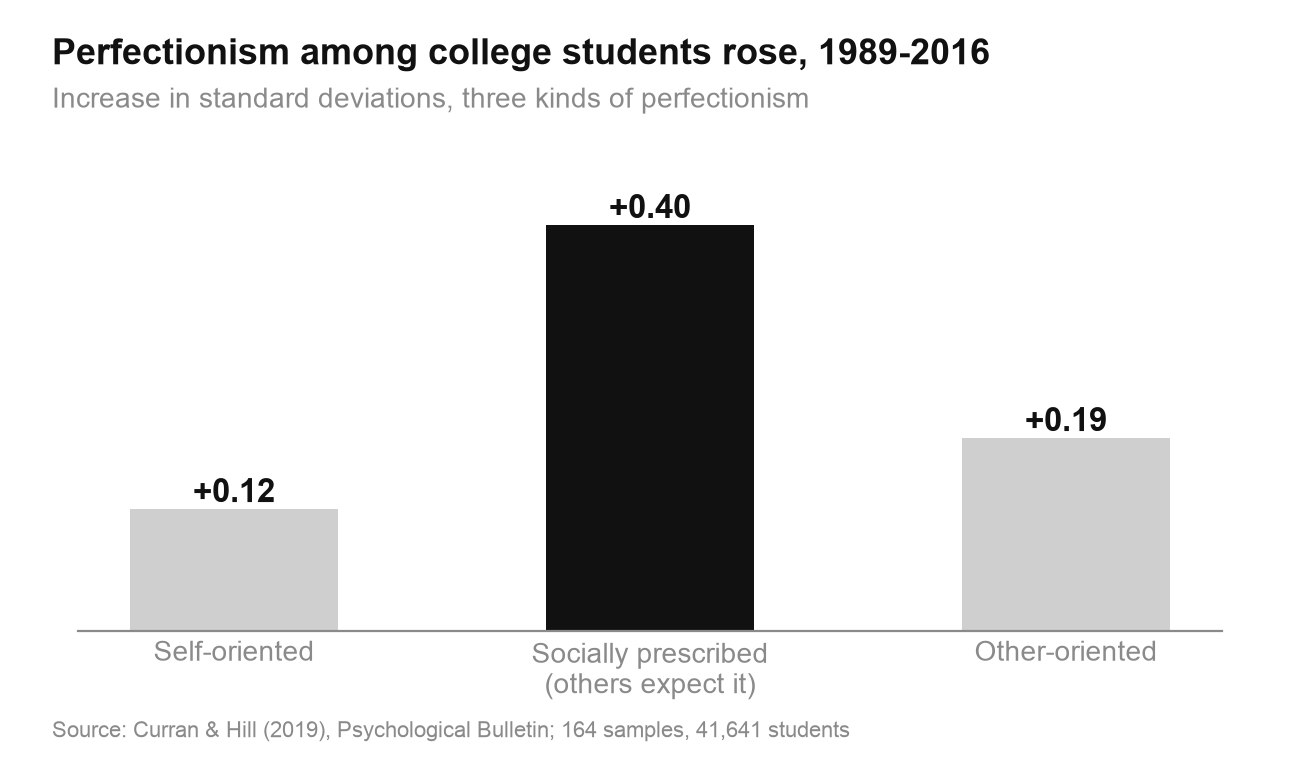
In other words, the Stadium has been adding seats.
Now compare the Stadium you’re picturing with the audience that would actually show up.
It’s three folding chairs: your mom, that guy named Greg from your office, and an empty chair with a jacket on it.
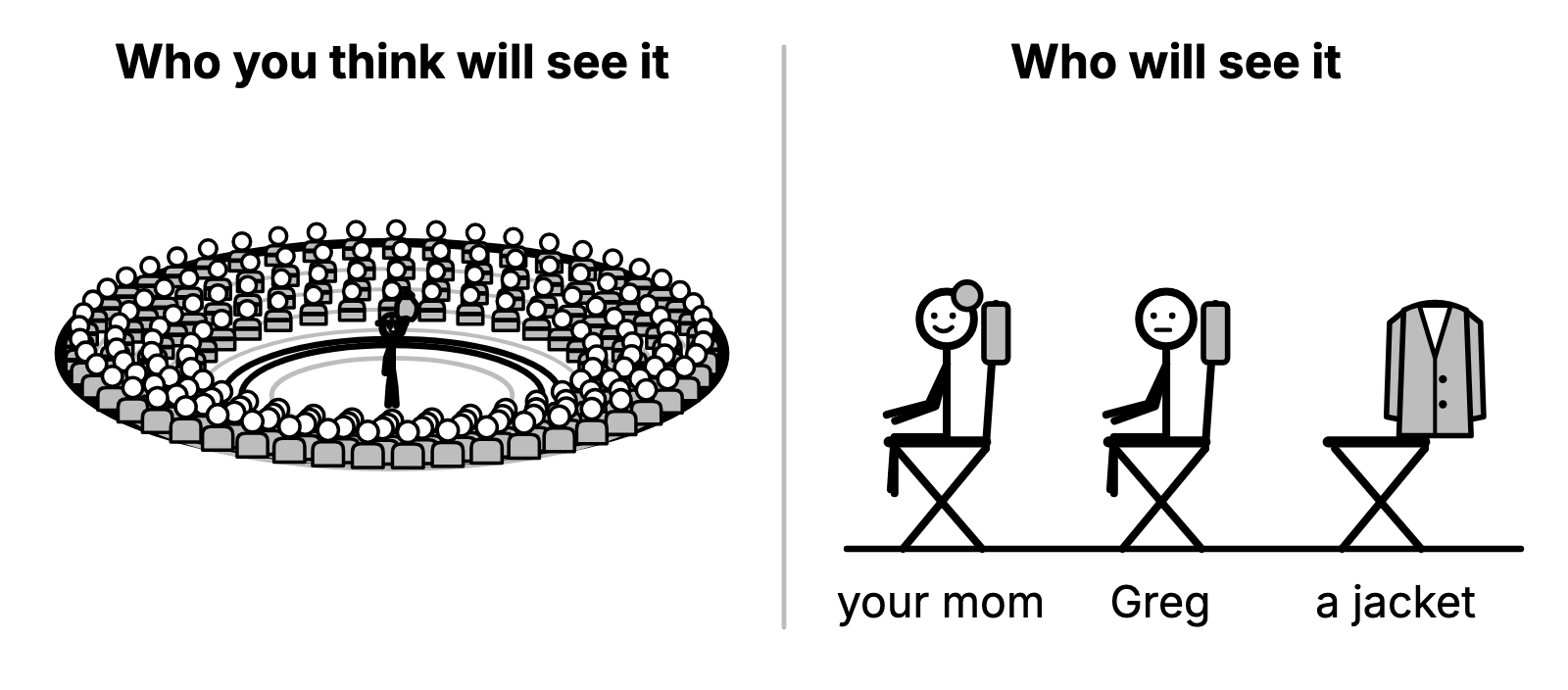
The real audience. At least Greg showed up.
But the Stadium doesn’t care about facts, and neither does the Emperor. So the Little Maker’s lumpy thing goes where lumpy things go.
Every perfectionist knows the Drawer.
The Drawer might be an actual drawer, or a folder on your desktop called “new stuff FINAL 2,” or a place in your head where a business you’ve been planning since the Obama administration has been resting comfortably.
Nobody has ever judged anything in the Drawer, because nobody has ever seen it.
It’s the safest place in the world, and everything in it is dead.
Meanwhile, at a Very Successful Animation Studio
In November 1993, a group of Disney executives sat down to watch an early version of an animated movie that a small company in Northern California had been working on for years.
It was going to be the first fully computer-animated feature ever made. The hero was a cowboy toy. And on the screen, the cowboy was a total jerk.
He was sarcastic. He bossed the other toys around. He was mean in a way that wasn’t funny.
Even the actor voicing him reportedly couldn’t stand the guy, and the story goes that during a recording session he blurted out, “This guy’s a real jerk!”
Disney shut the production down. People at the studio would later call that day Black Friday, and the team had to rebuild the story from the ground up, which took months.
The cowboy character went through a complete makeover. They changed him from a tyrant to a leader who was scared of being replaced.
The movie was (surprise, surprise) Toy Story. The company, of course, was Pixar.
Now, you’d think that a company with as many smashes as Pixar would be full of people whose first drafts are good. So it’s worth knowing that Ed Catmull, its co-founder, wrote this about how the place actually works:
“Early on, all of our movies suck.”
Early Monsters, Inc. was about a thirty-year-old man haunted by monsters from his childhood. Early Up involved, at one point, a floating city on another planet.
These were entirely different movies from the ones you know and love, and often terrible ones.
Catmull called the first version of anything an ugly baby, and what he figured out, more or less, was how to run a company where the Little Maker is protected from the Emperor.
An ugly baby, judged by the standards of a finished film, gets killed in the crib.
So Pixar built a whole system around the idea that the baby is allowed to be ugly for a while, as long as honest people are looking at it and it’s getting less ugly.
They call the group that does this the Braintrust, and it’s basically a room full of Notes Guys whose notes the director is free to ignore.
The Case for Being Bad
There’s a story you’ve probably heard on a podcast, from a little book called Art & Fear. A teacher splits a class in two. Half get graded purely on how much they make, and half get graded on one perfect piece.
Yada yada, at the end of the term, the best work comes from the people who were just cranking it out, while the perfect-piece people have spent the semester theorizing about greatness and have very little to show for it.
But the actual research is less charming and more convincing. In 2008, Nina Keith and Michael Frese reviewed the studies on what’s called error management training.
Some people learned a new skill while being encouraged to explore, make mistakes and learn from them, and others were trained to avoid errors.
The people who were allowed to be bad did better later, especially when they ran into problems they hadn’t seen before.
So letting the Little Maker make a mess turns out to be a pretty good training program.
A Warning About the Shrug Guy
Before you run off to be bad at things, we need to discuss one last character: a guy Kanye shrugging next to a pile of lumpy things, wearing a T-shirt that says “IT’S MY PROCESS.”
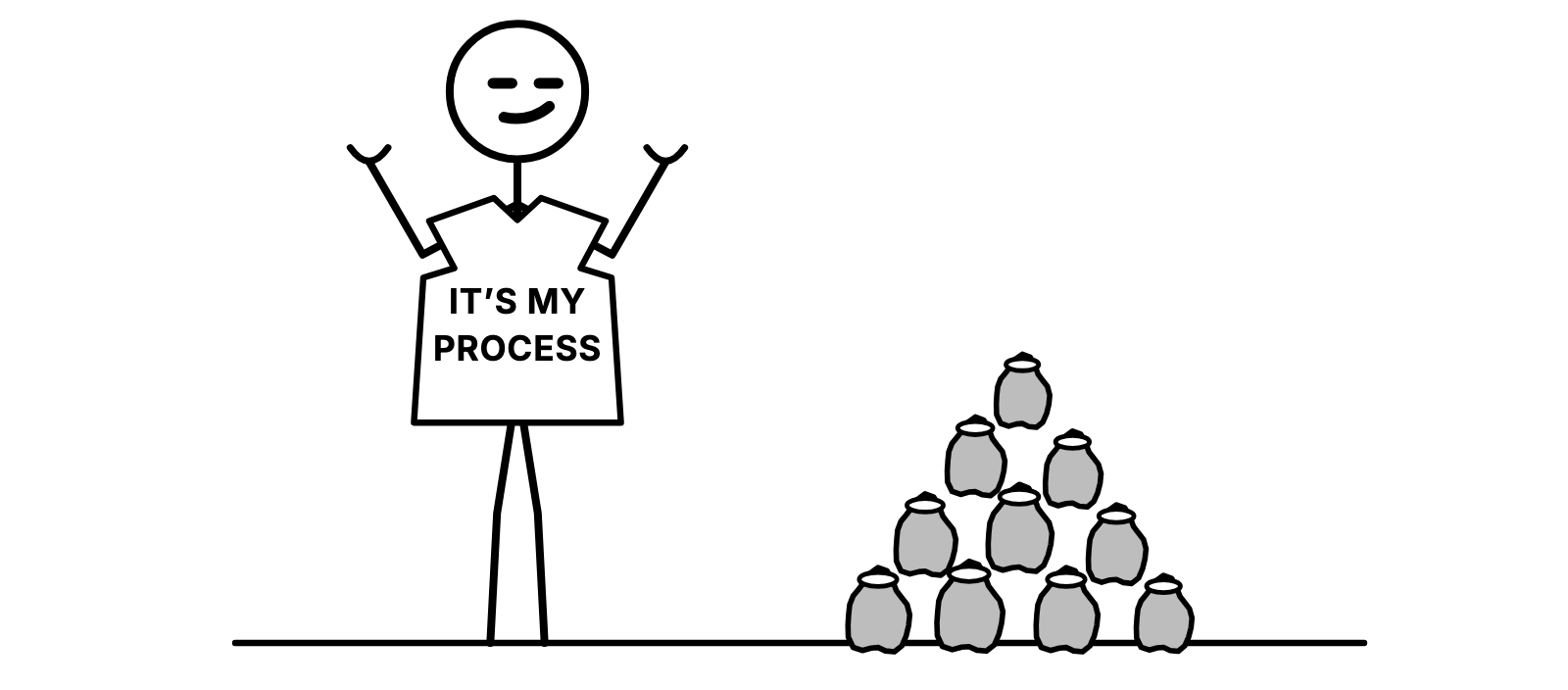
The Shrug Guy, “grinding.”
This is the Shrug Guy, and he read a headline about how bad is brave and took it as a career plan.
The Shrug Guy has found a different way of avoiding the arena. He announces that he doesn’t care what anybody thinks, then makes terrible shit forever and calls it awesome.
Think every 16-year-old rapper… ever.
Too much license to thrill. Not enough self-awareness to actually take constructive feedback and expand the skillset.
Remember, Pixar did not ship the jerk. The ugly baby gets protected so it has a chance to grow up.
Dreikurs and Adler would’ve drawn the line where they drew it everywhere else: at what the mistake is for.
A mistake you learn from points outward, toward better work and the people it could help. A mistake you shrug off to protect yourself is just another way of hiding from doing the work.
Voices in Your Head
So what are you supposed to do with this cast of characters parading around in your head all day?
Replace your real friends, of course.
Joking. Use them. Be mindful of them. And as crazy as it sounds… talk to them (not joking).
It’s very hard for the Emperor to boo something that’s already officially called ugly, so it helps to make the ugly baby on purpose and name it that.
The Notes Guy will still show up on page one with his finger in the air.
Usually it feels like friction, or like the sudden certainty, one paragraph in, that whatever you’re making is absolute trash.
And it might be. But one paragraph in is too soon to tell. So let the ugly baby at least be birthed.
The Notes Guy is useful. Don’t get rid of him. Just tell him he’s early, and he needs to sit in the corner and wait.
Thank him for his concern and tell him you’ll come find him when you’re ready.
The thumb is trickier, because it sounds exactly like you.
Listen closely and you’ll notice how often a fixable note like “the second act drags” reaches you as “I’m not a writer.”
Another pro move: when you catch yourself thinking about a defect, push on it. Almost every judgment about yourself can be turned into a fixable error.
So get some eyes on your work. Three honest readers will tell you which parts of the piece matter, and three is a long way from a stadium of “everyone.”
Adler’s advice to parents was to keep reminding their kids that “it is only the beginning that is difficult.” The Gap looks the widest when you’re starting.
The Jerk
Somewhere in Pixar’s archives, there’s a version of Toy Story where Woody is a jerk, and most people who love the movie have never seen it. But the Woody that fans came to adore wouldn’t exist without him.
Not every ugly baby grows up to be Toy Story. Most won’t. But none of them belong in the Drawer.
Remember Adler’s rule: errors only, never defects. Everything in the Drawer got put there because somebody (usually the Emperor) ruled it a defect.
Take it back out and most of it turns into what it always was, a rough draft with some mistakes.
But mistakes can be corrected. And a rough draft can be built upon.
So go open the Drawer. The Little Maker’s in there, and he’s been holding that lumpy thing up this whole time.
Somebody should probably see it.
KO
This week’s Small Brave Step: Take one thing out of the Drawer and show it to one person.
Call it an ugly baby when you hand it over. Ask them for feedback on something specific, not a verdict.
TL;DR
- High standards aren’t the problem. Most perfectionists are scared of what a mistake would prove about them.
- Your good taste (the Notes Guy) is useful. It just shows up too early, so tell it to wait until there’s a draft.
- The real problem is the Emperor, who turns “the first page takes too long to get going” into “you have no talent.” Adler’s rule: errors only, never defects.
- Even Pixar’s first drafts are bad. They call them ugly babies and protect them until they get less ugly.
- The audience you’re afraid of is a stadium. The one that would actually show up is three folding chairs.
Talk soon,
Kia
Want short ideas on cultivated courage? Follow me on LinkedIn, YouTube and Instagram.